
How to Preserve Your Harvest Without Fancy Equipment
Last updated on December 18th, 2025 at 03:55 pm
Welcome, friend! So—you have a garden. Your plants are thriving. In fact, they’re so abundant that you don’t know what to do with it all. Or maybe your neighbor’s garden is overflowing and you’ve been blessed with baskets of their extras. Either way, you want to make the most of your bounty.
Please read our disclaimer and Terms & Conditions
When I first started this journey, the idea of preserving food honestly scared me—especially pressure canning. The hissing, the timing, the fear of doing it wrong… yikes. But here’s the good news: you don’t have to start there. Today, I’m going to walk you through two simple ways to preserve your harvest without fancy (or intimidating) equipment—plus a bonus freezer tip!

Method 1: Water Bath Canning
I know—starting out can feel intimidating. My first year trying to water bath can peaches was a disaster. I was so excited, had jars lined up, and then… I completely forgot about the boiling water bath with a batch of can peaches out in my garage. By the time I remembered, the water had boiled completely away and my entire batch was ruined. All that hard work—gone.
It took me a few years to get brave enough to try again, but I’m so glad I did. When you don’t forget about it (lesson learned!), water bath canning is actually one of the easiest ways to preserve your harvest. And here’s the best part—when done correctly, your food can last up to ten years.

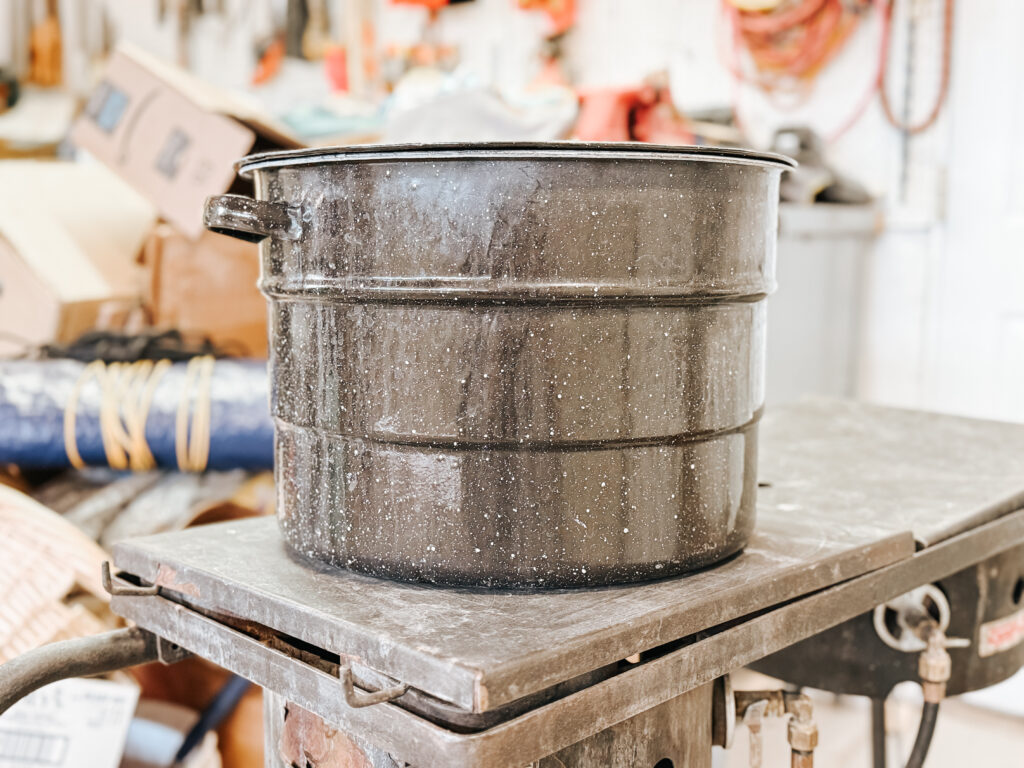


What you need:
- A large stockpot
- Mason jars (pint or quart)
- New wax-seal lids and rings
Best foods for water bath canning (high-acid):
- Apples
- Peaches
- Pears
- Berries
- Tomatoes
Step-by-step:
- Prepare your recipe according to a tested guide (I recommend the Ball Canning Recipe Book).
- Fill clean jars, leaving the recommended headspace.
- Wipe jar rims clean.
- Place on new lids and screw on rings until fingertip-tight.
- Submerge jars in boiling water for the recommended time (adjust for your altitude).
- Remove jars and let them cool undisturbed for 12–24 hours. During this time you will hear popping! It means your jars are sealing
- Check seals (lid is indented in center) before storing in a cool, dark place.
Pro tips:
- Always use brand-new wax-seal lids, and store them in a cool, dry place.
- Check secondhand stores for jars and pots, but inspect for cracks or chips on the rims.

Method 2: Fermenting Vegetables
Fermenting, or salt brining, is one of the oldest preservation methods in the world. All you need is water, salt, and your favorite vegetables. Not only does fermentation preserve food, but it also creates beneficial probiotics that support gut health.
At our house, I love putting fermented onions on my hamburgers. And having a jar of fermented carrots in the fridge makes for an easy side dish to throw on my family’s dinner plates.
Best vegetables for fermenting:
- Cucumbers (whole, sliced, or quartered)
- Carrots
- Garlic
- Cauliflower
- Beets
- Cabbage (hello, sauerkraut!)
- Peppers
- Radishes
- Snap beans
- Turnips
Step-by-step:
- Clean vegetables and cut them to your desired size.
- Mix a salt brine (about 2 tablespoons of good quality non-iodized salt per quart of water).
- Pack vegetables into a clean jar, leaving headspace.
- Pour brine over vegetables until fully submerged.
- Weigh vegetables down with a fermenting weight or clean rock (yes, I’ve done it!).
- Cover loosely with a lid or cloth.
- Let sit at room temperature until desired flavor develops (typically 3–10 days), then refrigerate.
Key tip: Keep vegetables completely submerged in brine to prevent mold or harmful bacteria.
Bonus: Freezing Your Harvest
Freezing is a quick and easy way to store produce for up to a year—perfect for beginners!
Step-by-step:
- Wash and chop vegetables.
- Portion into freezer bags in the amounts you’d typically use for a recipe.
- Squeeze out excess air before sealing.
- (Optional) Vacuum-seal for longer storage and less freezer burn.
- Label with contents and date before freezing.
Yes, you can freeze eggs! Just crack them into a freezer-safe bag, whisk lightly, seal, and freeze flat.
Quick-Reference Preservation Chart
| Method | Best For | Storage Life | Equipment Needed | Beginner-Friendly? |
|---|---|---|---|---|
| Water Bath Canning | High-acid fruits & recipes (jams, salsa, tomatoes) | Up to 10 years | Stockpot, jars, lids | ✅ Yes |
| Fermenting | Vegetables (cabbage, carrots, cucumbers) | 4–12 months (fridge) | Jars, salt, water | ✅ Yes |
| Freezing | Most fruits, vegetables, eggs | Up to 1 year | Freezer bags or vacuum sealer | ✅ Yes |
Wrapping It Up
Preserving your harvest doesn’t have to be complicated or require expensive gear. With these simple methods—water bath canning, fermenting, and freezing—you can enjoy your garden’s abundance all year long.
So, grab those jars, mix up some brine, and let’s make the most of this year’s harvest! And I’d love to hear from you—share how you preserve your harvest and experiences in the comments.


I love this! You don’t need anything fancy to get the job done!
The way you broke down food preservation is so simple and obtainable. Thank you so much for sharing this!
Perfect timing for this post! I currently have about 30 tomatoes and the only one in my family who eats them as they are, so I need to do something with them. Thank you!
This is a great guide to preserving, love it! I have been using these methods for over 40 years, and my mom and grandma did so as well before me, and they don’t get outdated. My favorite way to preserve is fermenting. The benefits are so amazing!
This is super helpful! I’ve been wanting to step into more canning and preserving of our garden harvest, but I’ve felt a bit intimidated. This post is so encouraging and informative. Thank you!
Beginner canner here and these are great tips and advice!
Great information, I love that there’s no fancy equipment or techniques necessary! Thanks for sharing 🙂
Love these! This year im perfecting the freezing method 🙂
I like the simplicity of having versatile tools, and easy methods to preserve the harvest:)
I love fermenting, but haven’t tried canning yet. Your tips will be so helpful for when I get started.
Lots of great info here! I would really like to get more familiar with fermenting. I haven’t done much.