
3 Ways to Raise Baby Chicks: Simple Methods for the Homestead
Last updated on May 26th, 2026 at 08:54 pm
Every spring, the feed stores start filling with tiny peeping chicks, and somehow it never gets old. There is just something sweet about bringing new life onto the homestead after a long winter.
When we first started raising chickens, one of my biggest questions was simple: How do you actually raise baby chicks?
Over the years, we’ve raised chicks a few different ways — in a brooder by hand, under broody hens, and naturally with our flock. Each method has its place, and each one teaches you something different about slowing down and working alongside the way God designed animals to live.
Raising chicks is one of the best ways to begin building a more self-reliant homestead. It teaches patience, stewardship, responsibility, and gives children such a hands-on connection to farm life. And honestly, there are few things sweeter than hearing little peeps coming from the barn or watching a mother hen proudly march her babies across the yard.
Today I want to walk you through the three methods we’ve personally used to raise baby chicks, along with the pros and cons of each one.
Please read our Disclaimer and Terms & Conditions

1. Raising Chicks by Hand in a Brooder
(The Most Common Way to Start)
This is the way most people begin raising chicks, and it is how we started too. If you’re bringing home chicks from a feed store or hatching them in an incubator, you’ll need a warm, safe brooder setup until they feather out.
There is something cozy about a brooder tucked into the garage or barn in early spring — the soft peeping, the warm glow of the heat lamp, and little ones running out first thing in the morning to check on the chicks before breakfast.
You do not need anything fancy to get started either. Some of our first brooders were made from old pallets and scrap wood we already had around the homestead.
Basic Brooder Essentials
- A secure brooder box or enclosed area
- Wire mesh or a cover to protect chicks from cats and other curious animals
- A red 250-watt infrared heat lamp hung securely overhead
- Bedding such as peat moss, straw, coarse sand, or shredded paper
- Fresh water, chick starter feed, and chick grit


We personally avoid clamp lamps and always hang our heat lamps securely from ceiling beams or sturdy supports. Safety matters, especially in dry barns and garages.
Heat & Lighting
Baby chicks cannot regulate their body temperature well at first, so warmth is important during those early weeks.
We keep the heat lamp high enough that the chicks can move closer or farther away depending on what they need. Watching their behavior tells you more than a thermometer sometimes. If they are piled tightly together, they are cold. If they are spreading far away from the lamp and panting, they are too hot.
For the first couple of days, keeping light on helps them quickly learn where food and water are. After that, natural daylight works well if your brooder space gets enough light.
Keeping the Brooder Clean
A clean brooder makes a huge difference in keeping chicks healthy.
We try to freshen bedding often and do full clean-outs weekly or sooner if needed. Damp bedding can quickly lead to sickness, especially when chicks are crowded together.
As they grow, they also need more room than most people expect. Giving them enough space helps prevent boredom and pecking issues. Trust us on this. It never fun experiencing this.
Feed, Water & Grit
Fresh water should always be available, and using a proper chick waterer helps keep bedding from getting soaked.
One thing we’ve personally done for years is adding a small splash of apple cider vinegar to their water occasionally. Many homesteaders believe it helps support healthy digestion and overall gut health.
We also keep chick grit available in a separate feeder, especially once they begin pecking at anything besides starter feed.
Why I Still Love This Method
Raising chicks by hand creates such a strong bond with them. You learn their little personalities early on — the bold ones, the shy ones, the troublemakers that somehow always end up standing in the feeder.
For families with children, it is also one of the sweetest introductions to caring for animals and learning responsibility in a hands-on way. Want a more indepth post on raising chicks this way? Check out this post.
2. Letting a Broody Hen Raise Hatchery Chicks
(One of My Favorite Ways)
If you want a more natural way to raise chicks while still choosing specific breeds, letting a broody hen adopt hatchery chicks is such a wonderful middle ground.
Honestly, this has become one of my favorite ways to raise baby chicks over the years.
A broody hen is a hen determined to hatch eggs. She will stay on the nest most of the day, puff up at anyone who comes near, and make the funniest little growling noises if you try to move her. Some hens become incredibly committed mothers.
Once we notice a hen going broody, we’ll pick up day-old chicks from the feed store or hatchery and wait until after dark to place them underneath her.
How We Introduce Chicks to a Broody Hen
Once nighttime settles in and the hen is calm:
- Gently lift the hen
- Remove an egg from beneath her
- Carefully tuck a chick underneath
- Repeat until all chicks are under her
We usually stick with around 2–6 chicks per hen depending on her size and temperament.
Waiting until dark helps the transition happen more naturally, and many hens wake up the next morning fully convinced those chicks are theirs.
And truly, a good broody hen does a better job raising chicks than we ever could.
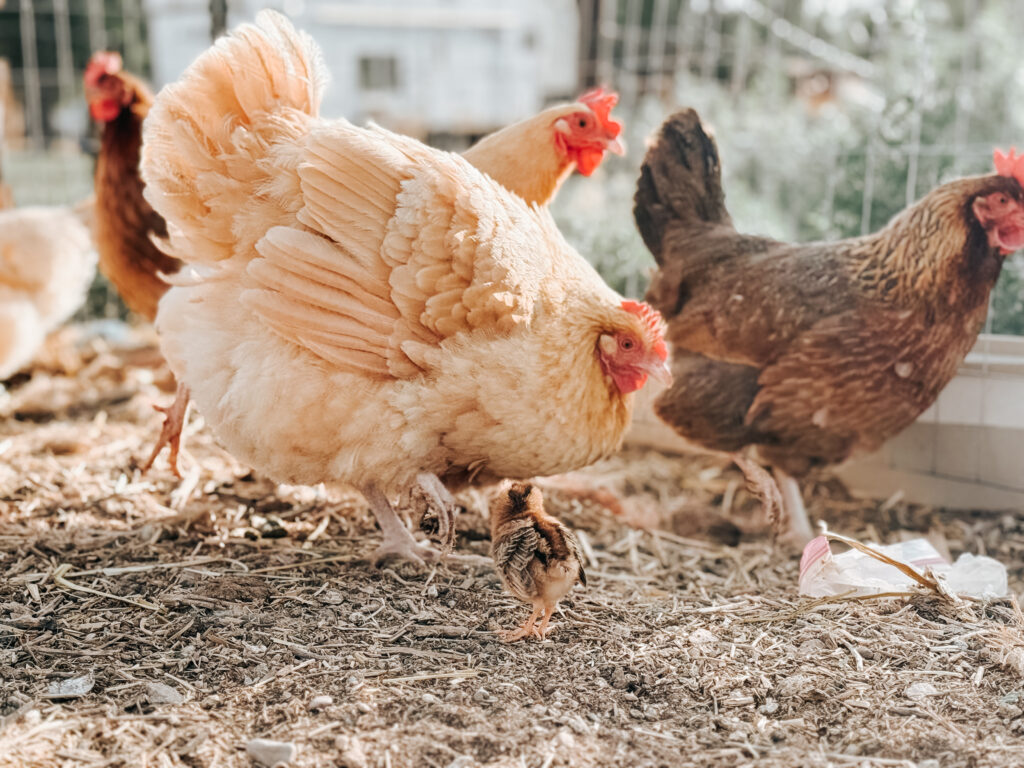
She keeps them warm, teaches them how to scratch and forage, protects them from danger, and gently calls them over when she finds food.
Why I Love This Method
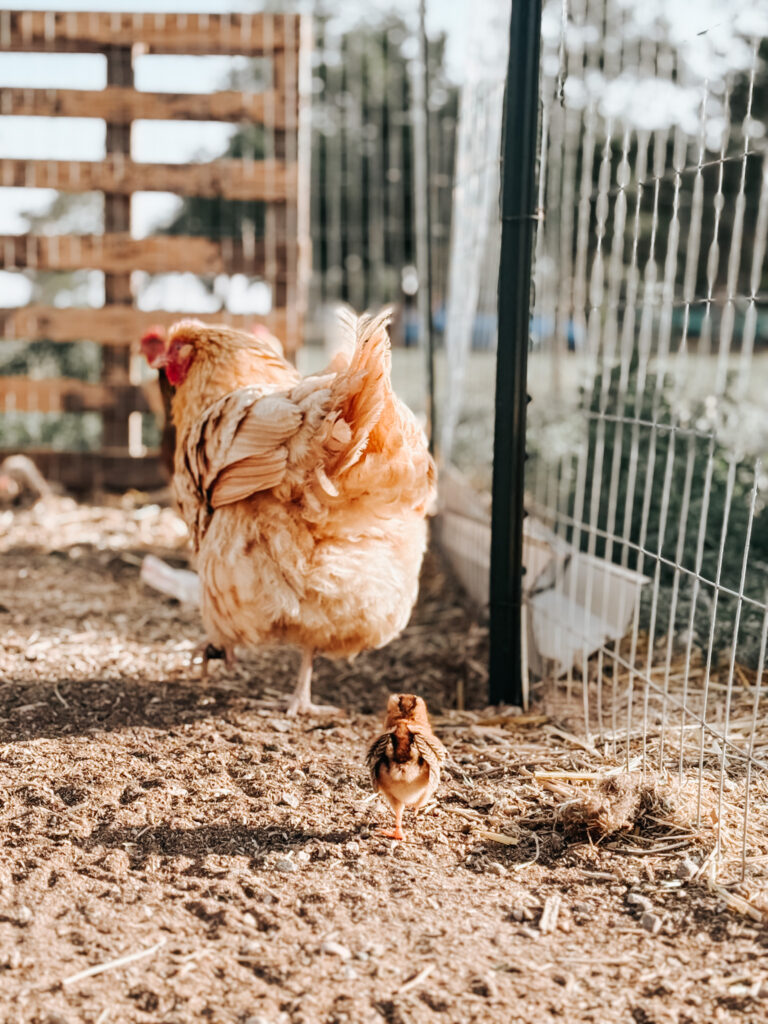
There is something deeply beautiful about watching a mother hen raise babies the way God designed her to. Watching the way they protect and care for their little one gives you a peace and joy I can’t really explain.
You do not need:
- a brooder
- heat lamps
- constant monitoring
The hen handles most of the work herself.
I’ve also noticed chicks raised by hens seem calmer and more confident in the flock early on because they learn natural chicken behavior right away.
Our Buff Orpingtons have always been wonderful mothers. They are gentle, friendly birds that do especially well around children, which is one reason we continue raising them on our homestead.
Watching a fluffy Buff Orpington momma leading a trail of tiny chicks across the yard never really gets old.
A Few Challenges to Expect
Not every broody hen will accept chicks, and every once in a while you may end up with a hidden nest somewhere around the property.
You will also want to pay attention to where your broody hen chooses to nest. Make sure the chicks can safely get in and out of the nesting area without falling or getting hurt. Fresh water and feed should also be nearby so the chicks can easily follow their momma hen as she moves around.
If young chicks are unable to keep up with their mother or become separated from her, they can become vulnerable to the rest of the flock. Some hens may peck at or even kill chicks that are not protected by their momma, especially when introducing new babies into an established flock.
3. Letting the Flock Raise Its Own Chicks
(The Old Ways Approach)
If your goal is building a more self-reliant flock, sometimes the best thing you can do is simply step back and let the chickens do what they were created to do.
With a healthy rooster and good mother hens, your flock can naturally hatch and raise chicks with very little help from you.
This is by far the most traditional way to raise chickens, and honestly, there is something peaceful about watching the natural rhythm of the flock unfold on its own.
The hens build nests, sit faithfully on eggs, and eventually emerge proudly with tiny chicks following behind them.
No incubators.
No brooder tubs.
No heat lamps hanging in the garage.
Just the natural rhythm of the flock.
Why This Method Works So Well
One of the biggest benefits is simplicity.
The chicks are raised outdoors from the beginning, exposed gradually to weather, dirt, bugs, grasses, and the normal environment of the flock. Many homesteaders believe this helps build stronger immune systems and hardier birds overall.
The hens also teach the chicks everything they need to know:
- where to forage
- how to dust bathe
- what foods are safe
- how to stay close to the flock
And for the homesteader, it removes a lot of work and expense.
If your goal is long-term sustainability and maintaining your flock naturally year after year, this method makes the most sense.
One Thing to Keep in Mind About Roosters
A good rooster can be incredibly valuable to a flock. He protects hens, watches for danger, and keeps order in the yard.
But not every rooster is kind.
Some become aggressive during breeding season or overly rough with hens. We’ve had both wonderful roosters and difficult ones over the years, and temperament matters more than many people realize.
A mean rooster can make chores stressful quickly, especially around children, so do not feel bad about removing aggressive birds from your breeding program.
A calm flock starts with good animals.
Choosing the Right Breed for Your Homestead
With so many chicken breeds out there, choosing the right one can feel overwhelming at first.
Before picking a breed, think about what fits your homestead best. Some chickens are excellent egg layers, while others are better for meat or serve as dependable dual-purpose birds.
You will also want to consider:
- your climate
- temperament
- how well they do with children
- whether they tend to go broody
- egg size and color
- free-ranging ability
Our family personally loves Buff Orpingtons, but soon will be adding Icelandic chickens. However, Buff Orpingtons are gentle, dependable birds with wonderful mothering instincts and calm personalities. They tolerate cold weather well, do great around children, and fit beautifully into a family homestead setting.
If you are just starting out, they are one of my favorite breeds to recommend.

Common Beginner Mistakes When Raising Chicks
If you are new to chickens, know that everyone learns as they go.
Some of our best lessons on the homestead came through trial and error.
A few common mistakes beginners make are:
- overcrowding brooders
- overheating chicks
- not predator-proofing coops well enough
- introducing young chicks to older hens too quickly
- choosing breeds that do not fit their climate or goals
Do not let mistakes discourage you. Raising animals is a learning process, and every season teaches you something new.
When Can Chicks Move Outside?
One of the most common questions people ask is when chicks can safely move outdoors.
Typically, chicks are ready once they are fully feathered and nighttime temperatures are warm enough. For us, this usually happens around 6–8 weeks depending on the weather.
When introducing them to the flock, we try to do it gradually when possible. Older hens can be rough on young birds at first while everyone sorts out the pecking order.
Giving younger chicks places to hide and extra space during introductions helps tremendously.
Final Thoughts
There really is something special about raising chicks, no matter which method you choose.
Whether it’s tiny peeps coming from the brooder in the garage, children carrying chicks around the yard, or watching a mother hen teach her babies how to scratch and forage, it all brings you a little closer to the rhythms of the old ways.
Chickens have a way of slowing you down and reminding you to pay attention to the small things. They teach responsibility, stewardship, and the beauty of caring for something with your own two hands.
If you’re just getting started, do not overcomplicate it. Start simple, learn as you go, and enjoy the process. Some of our best lessons on the homestead came through trial and error.
If you want a deeper dive into chicken care, Storey’s Guide to Raising Chickens has been a wonderful resource for our family over the years.
And before bringing home your new flock, make sure to check your local city or county regulations for backyard chickens.
Your Turn
How do you raise chicks on your homestead? Do you prefer brooding chicks by hand or letting a mother hen do the work?
I’d love to hear your experiences, favorite breeds, and tips in the comments below.





This is wonderful!! We are getting chicks soon, getting all the housing situated first 😊 thanks for this guide!!
Love this! Had no idea you could put chicks under a brooding hen.